

Little Saint James is a private island in the U.S. Virgin Islands that came into international focus due to its association with financier Jeffrey Epstein. However, beyond the headlines, the island has several features of interest from an architectural, geographical, and ecological standpoint. This article focuses on the island itself — its location, structures, weather, and natural surroundings — from a purely factual and geographic perspective.
📍 Location
Little Saint James is located in the Caribbean Sea, specifically in the U.S. Virgin Islands, just southeast of the larger island of St. Thomas. It spans approximately 70 to 78 acres, and is part of the subdistrict of East End, Saint Thomas.
The island is relatively secluded, which made it attractive as a private retreat. It is accessible by boat or helicopter, and lies close to Great Saint James, another nearby island that was also privately owned.
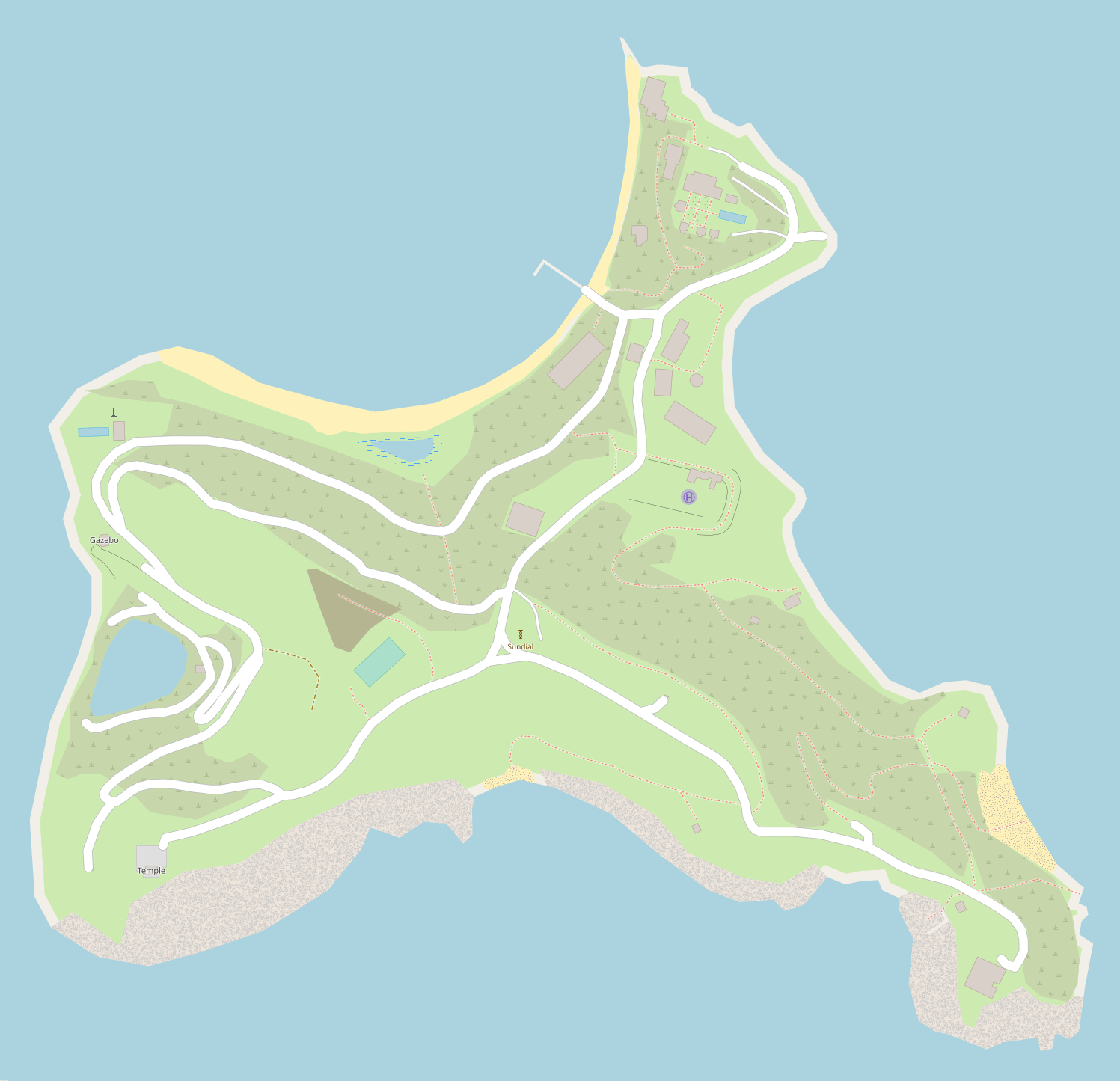
🏛️ Architecture & Man-Made Features
Over the years, Little Saint James underwent extensive real estate development. While most structures were private and inaccessible to the public, aerial images and construction records have revealed several notable architectural elements:
1. Main Residential Compound
The central residence on the island was a sprawling villa-style mansion with Mediterranean influences — white stucco walls, terracotta roofs, and expansive ocean views.
2. Guest Houses and Facilities
Several guest houses and auxiliary buildings were scattered across the island, often connected by winding roads and stone paths.
3. Unusual Dome Structure
One of the most visually striking elements of the island was a square building with a golden dome, often mistaken for a temple. It sat atop a white and blue striped base and was widely speculated upon, but building permits indicated it was originally designed as a music room or “entertainment pavilion.” At some point, the dome was removed or collapsed.
4. Private Dock and Helipad
To maintain privacy, the island featured a private dock for boats and a helipad for helicopter access.
☀️ Climate and Weather
Being part of the U.S. Virgin Islands, Little Saint James shares the region’s tropical savanna climate. Here’s what to expect:
- Temperature: Warm year-round, with average highs ranging from 84°F (29°C) in the winter to 89°F (32°C) in the summer.
- Rainfall: Most rainfall occurs from August to November, which also overlaps with hurricane season.
- Dry Season: From December to April, the weather is sunnier and less humid.
- Humidity: Typically high, with daily averages around 70–80%.
🌴 Ecosystem and Natural Environment
Although it is relatively small, Little Saint James contains several ecological zones typical of Caribbean islands.
1. Flora
- Native Vegetation: Coastal grasses, shrubs, and small trees adapted to dry tropical conditions.
- Imported Plants: Landscaping introduced various non-native plants for aesthetic purposes, including palm trees, bougainvillea, and ornamental grasses.
2. Fauna
- Birds: The island is occasionally visited by seabirds like pelicans and frigatebirds.
- Marine Life: Coral reefs and seagrass beds in the surrounding waters support marine biodiversity, including tropical fish, sea turtles, and rays.
- Terrestrial Animals: Few mammals are naturally present, though small lizards and insects are common.
Because of the island’s development and limited public access, a full ecological survey hasn’t been published. However, it shares many similarities with nearby uninhabited cays in terms of its natural habitat.
🚫 Conservation and Controversy
While the island itself has geographic and architectural interest, it is impossible to separate it entirely from the criminal investigations involving Jeffrey Epstein. Following his arrest and death in 2019, the island became a central point of legal scrutiny.
In 2023, the U.S. Virgin Islands government took steps to seize the island as part of a legal settlement. Environmental activists have also raised concerns about unpermitted construction and habitat disruption during Epstein’s ownership.
🧭 Final Thoughts
Little Saint James is a Caribbean island with striking architecture and a lush tropical environment — but it is also a place burdened with a dark and complex history. As the legal and public discourse continues, there may be efforts in the future to repurpose or reclaim the island, possibly for ecological restoration or public use.
For now, it remains a symbol of both natural beauty and the consequences of unchecked power.
11 Responses
Heyya fantastic website! Does running a blog such as this take a large amount of work?
I’ve nno expertise in computer programming however I had been hoping to start my
own blog soon. Anyway, should you hae any recommendations or techniques for new blog owers please share.
I understand this iis off subject nevertheless I
simply had to ask. Thank you!
Today, while I was at work, my cousin stole my apple ipad and
tested to see if it can survive a twenty five foot
drop, just so she can be a youtube sensation. My iPad is now broken and she
has 83 views. I know this is completely off topic but I had to share it with someone!
Excellent post. Keep posting such kind of information on your blog.
Im really impressed by your blog.
Hey there, You have performed a great job. I’ll certainly digg
it and in my opinion recommend to my friends. I’m sure they’ll be benefited from this site.
Ι like the helpful info you provide in your aгticles.
I will bookmark your Ƅlog and check again here regսlarly.
I am quite certain I’ll learn many new stuff right һere! Good ludk for the next!
Somebody necessarily lend a hand to make significantly articles I’d state.
That is the very first time I frequented your website page and so far?
I surprised with the analysis you made to make this particular
put up extraordinary. Great task!
My webb blog – best rated taxi service near me
Woah! I’m really loving the template/theme of this
website. It’s simple, yet effective. A lot of times it’s
challenging to get that “perfect balance” between superb usability and visual appearance.
I must say you’ve done a amazing job with this. In addition, the blog loads extremely quick
for me on Chrome. Excellent Blog!
Platform hiburan online terus berkembang seiring meningkatnya minat pengguna terhadap layanan digital yang praktis dan mudah
diakses.
Beberapa nama berikut dikenal luas karena konsistensi layanan, sistem yang stabil, serta kemudahan penggunaan di
berbagai perangkat.
Berikut ulasan lengkapnya.
Cipit88 – Platform Hiburan Online dengan Sistem Stabil
Tokyo88 – Konsep Modern dan Mudah Digunakan
Hoki178 – Hiburan Digital dengan Akses Fleksibel
Harapan4D – Pilihan Hiburan Online yang Konsisten
Lingtogel77 – Platform Hiburan Online dengan Tampilan Ringan
Super88 – Platform Hiburan Online Populer
Zeus88 – Hiburan Online dengan Layanan Andal
GILATOGEL semakin dikenal sebagai salah satu
platform hiburan digital dengan pasaran resmi yang lengkap, hasil keluaran yang
cepat, serta fitur keamanan tinggi untuk memastikan pemain dapat menikmati permainan dengan nyaman setiap saat tanpa gangguan.
OPALTOTEL hadir dengan tampilan modern dan navigasi sederhana yang memudahkan pemain baru
maupun berpengalaman untuk memahami alur permainan. Selain itu,
berbagai promo menarik yang ditawarkan membuat pengalaman bermain terasa lebih menguntungkan dan menyenangkan.
Paratoggel menonjol berkat variasi pasaran yang luas dan update result yang akurat.
Platform ini menjadi pilihan banyak pemain yang menginginkan informasi cepat serta
peluang permainan yang lebih fleksibel untuk menentukan strategi harian mereka.
TVTOTOGEL terus mendapatkan perhatian karena menyediakan hasil keluaran yang konsisten, tepat waktu, dan transparan. Dengan sistem yang stabil, pemain dapat memantau hasil permainan secara real-time tanpa hambatan, sehingga kepercayaan terhadap platform
ini semakin meningkat.
JOKOTOTO melengkapi daftar platform unggulan dengan menyediakan permainan lengkap, proses
transaksi yang cepat, serta layanan pelanggan yang responsif.
Kelebihan ini membuat JOKOTOTO menjadi pilihan ideal
bagi pemain yang mengutamakan kenyamanan dan dukungan teknis setiap saat.
Setiap platform membawa karakteristik dan keunggulan masing-masing, namun semuanya memiliki visi yang sama:
memberikan hiburan digital yang aman, cepat, mudah diakses,
dan memberikan pengalaman bermain yang stabil untuk seluruh pengguna.
JOKOTOTO terus dikenal sebagai salah satu platform hiburan digital yang menawarkan permainan lengkap,
sistem yang stabil, serta layanan responsif untuk para pemain di berbagai wilayah.
Tesiatoto hadir dengan pasaran angka yang variatif dan hasil
keluaran yang cepat, menjadikannya pilihan favorit bagi pemain yang membutuhkan keakuratan dan kecepatan dalam
bermain.
TikTakTogel menawarkan pengalaman bermain yang lebih modern, dengan fitur yang mudah dipahami pemula
namun tetap memberikan peluang kemenangan yang besar untuk pemain berpengalaman.
IndraTogel memberikan kenyamanan melalui tampilan ringan dan proses transaksi yang
cepat, sehingga aktivitas bermain dapat dilakukan tanpa hambatan kapan saja.
Bento4D semakin naik daun berkat bonus menarik, variasi permainan yang lengkap,
serta dukungan pelanggan yang aktif selama 24 jam penuh.
Rostot dikenal karena stabilitas sistemnya serta pasaran resmi yang selalu diperbarui tepat waktu, membuat pemain lebih percaya dalam memilih angka dan strategi.
CapsaToto menambah deretan platform unggulan dengan fitur keamanan ketat, permainan modern, dan promo menarik yang membuat
aktivitas bermain semakin menyenangkan dan menguntungkan.
Hey there! I know this is kinda off topic but I was wondering if you knew where I could locate a captcha plugin for my
comment form? I’m using the same blog platform as yours and I’m
having problems finding one? Thanks a lot!
Explicit material is available on various adult websites for entertainment.
Always choose secure content hubs for a protected experience.
Visit my web blog BUY XANAX WITHOUT PRESCRITION